
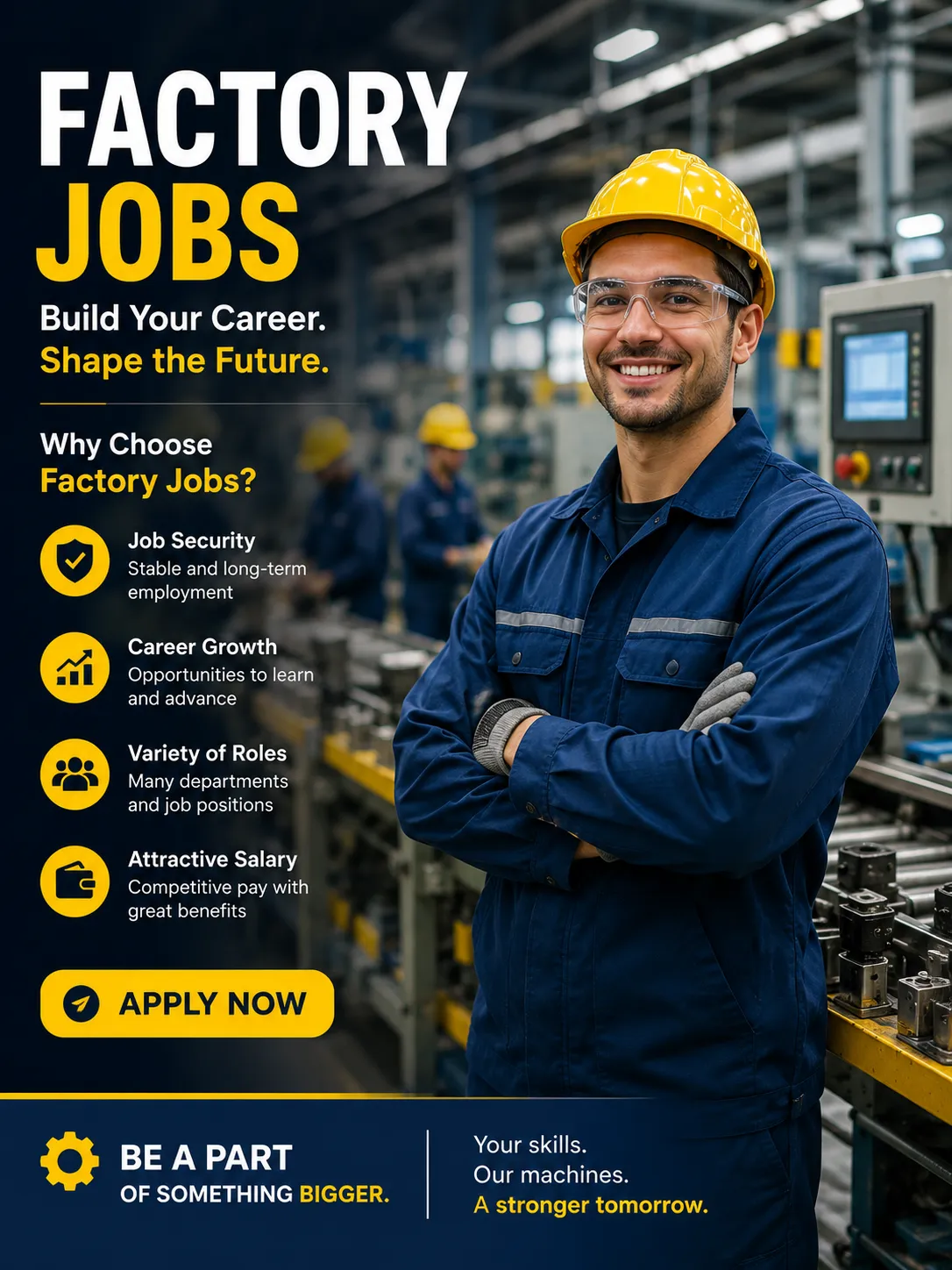
Factory Jobs
Factory Jobs – Work Opportunities
Factory jobs include roles like machine operators, helpers, and supervisors.
Skills needed:
- Physical strength
- Basic technical knowledge
- Teamwork
Factory jobs often provide stable income and long-term opportunities.
Factory Jobs: A Complete Guide to Finding and Building a Career in Factory Work
Factory jobs are an important part of many industries around the world. Factories produce the products people use every day, including food, clothing, furniture, electronics, machines, vehicles, packaging, and building materials. Because factories need many different workers to keep production running, they can provide employment opportunities for people with different skills and levels of experience.
For people looking for a practical job, factory work can be a good option. Some positions require technical training or previous experience, while many entry-level jobs provide training to new workers. With experience and hard work, a factory employee may also have opportunities to move into a senior or supervisory position.
In this article, we will explain what factory jobs are, the common types of factory work, the skills required, how to find a factory job, and how to build a successful career in manufacturing.
What Is a Factory Job?
A factory job is a position in a workplace where products or materials are manufactured, assembled, processed, packaged, or prepared for distribution.
Factory employees can perform many different tasks. Some workers operate machines, while others assemble products, check quality, package goods, move materials, maintain equipment, or supervise production teams.
The exact work depends on the type of factory. A food factory will have different jobs from a clothing factory, automobile factory, electronics factory, or furniture factory.
Most factories work according to production schedules. Employees may therefore need to follow specific procedures and complete their work within a certain amount of time.
Common Types of Factory Jobs
There are many different positions available in factories. The following are some of the most common.
1. Factory Worker
A general factory worker usually helps with basic production tasks. Duties may include assembling products, sorting materials, preparing items, cleaning work areas, and assisting other workers.
This can be a suitable position for someone looking for an entry-level job.
2. Production Worker
Production workers are involved directly in the manufacturing process. They may operate equipment, assemble products, prepare materials, or monitor production lines.
Attention to detail is important because workers need to make sure products meet company standards.
3. Machine Operator
Machine operators use manufacturing equipment to produce or process goods. They may start and stop machines, adjust settings, monitor production, and report problems.
Some machine operator positions require technical training, while others provide on-the-job training.
4. Packaging Worker
Packaging workers prepare finished products for storage, transportation, or sale. Their duties can include putting products into boxes, labeling packages, checking quantities, and preparing shipments.
Packaging jobs may require workers to perform repetitive tasks efficiently while maintaining accuracy.
5. Quality Control Inspector
Quality control workers check products to make sure they meet the company’s standards.
They may inspect products for defects, measure items, test materials, record results, and report problems to supervisors.
Accuracy and attention to detail are especially important in this role.
6. Warehouse Worker
Many factories have warehouses where raw materials and finished products are stored.
Warehouse workers may receive deliveries, organize stock, prepare orders, move materials, and keep inventory records.
Depending on the workplace, some positions may require training to operate equipment safely.
7. Maintenance Worker
Factories depend on machines and equipment, so maintenance workers play an important role.
They inspect equipment, perform repairs, replace damaged parts, and help prevent machinery problems.
People with electrical, mechanical, plumbing, or technical skills may find good opportunities in factory maintenance.
8. Factory Supervisor
A factory supervisor manages a team of workers and helps ensure production targets are achieved.
Supervisors may assign tasks, monitor employee performance, solve production problems, check safety procedures, and communicate with managers.
These positions usually require previous factory experience and strong leadership skills.
Skills Needed for Factory Jobs
Different factory jobs require different skills, but some abilities are useful in almost every manufacturing workplace.
Physical Fitness
Some factory positions require employees to stand, walk, lift materials, or perform physical tasks for several hours.
Workers should understand the physical requirements of the job before accepting a position.
Attention to Detail
Small mistakes can affect the quality of a product. Workers need to carefully follow instructions and check their work.
Attention to detail is especially important for quality control, machine operation, and assembly positions.
Teamwork
Factory production is usually a team effort. Employees need to communicate with coworkers and supervisors to keep production moving smoothly.
Being respectful and cooperative can make the workplace more productive.
Time Management
Factories often have production targets and deadlines. Employees need to complete tasks efficiently without ignoring quality or safety.
Good time management can help workers stay organized during busy shifts.
Basic Technical Skills
Many modern factories use computers, automated machines, scanners, and digital systems.
Basic computer knowledge can therefore be useful even for entry-level workers. Employees who learn technical skills may also have more opportunities for career development.
Safety Awareness
Safety is extremely important in factory environments. Workers may be around machines, tools, chemicals, heavy materials, or moving equipment.
Employees should always follow safety instructions and use required protective equipment.
Education and Training Requirements
The education needed for a factory job depends on the position.
Some entry-level jobs may not require a college degree. Employers may focus on reliability, physical ability, basic communication, and willingness to learn.
Technical positions may require vocational training, certificates, or previous experience. For example, maintenance technicians may need training in electrical or mechanical systems.
Supervisory and management positions may require additional education and several years of industry experience.
If you are interested in factory work, learning practical skills through vocational courses or technical training can improve your employment opportunities.
Factory Jobs for Beginners
Factory work can be a useful starting point for people who do not have much professional experience.
Many factories hire entry-level workers and provide training after they join. New employees may learn how to operate equipment, follow production procedures, inspect products, and maintain workplace safety.
When applying for your first factory job, focus on qualities such as reliability, punctuality, teamwork, and willingness to learn.
Previous experience in construction, warehouse work, farming, retail, delivery, or other practical jobs may also provide useful skills.
How to Find Factory Jobs
There are several ways to search for factory employment.
Online job websites are a common place to find manufacturing vacancies. You can search for terms such as “factory worker,” “production worker,” “machine operator,” “warehouse worker,” or “factory assistant.”
You can also check the websites of manufacturing companies and look for their careers or vacancies sections.
Another option is to contact factories directly. Some companies accept CVs from job seekers even when they do not currently advertise a position.
Employment agencies can also help connect workers with manufacturing companies.
When searching for a job, check the location, working hours, salary, duties, and requirements before applying.
How to Prepare a CV for a Factory Job
A good CV can help employers understand your skills and experience.
Start with your name and contact information. Then include a short professional summary explaining what type of work you are looking for.
List your previous employment, education, training, and relevant skills.
If you have worked with machines, tools, inventory, packaging, construction equipment, warehouses, or production systems, include that experience.
If you are a beginner, focus on transferable skills such as teamwork, punctuality, physical ability, attention to detail, and willingness to learn.
Keep your CV clear and avoid unnecessary information. Always check for spelling mistakes before submitting it.
Preparing for a Factory Job Interview
Before attending an interview, learn about the company and understand what the position involves.
Be prepared to answer questions about your previous work experience, availability, skills, and ability to work in a team.
You may also be asked questions about safety and how you would handle a workplace problem.
For example, an employer might ask:
- Why do you want to work in a factory?
- Do you have previous production experience?
- Can you work different shifts?
- Are you comfortable working as part of a team?
- Have you used machines or tools before?
- What would you do if you noticed a safety problem?
Answer honestly and clearly.
Arrive on time and dress neatly. Show the employer that you are responsible, hardworking, and willing to learn.
Factory Working Hours and Shifts
Factory work can involve different schedules depending on production needs.
Some factories operate during normal daytime hours, while others operate throughout the day and night. Employees may therefore work morning, evening, or night shifts.
Some factories may also require weekend or holiday work.
Before accepting a job, ask about the working schedule, breaks, overtime, days off, and shift arrangements.
People who are flexible with their schedules may find more job opportunities in manufacturing.
Advantages of Factory Jobs
Factory jobs offer several advantages.
One major benefit is that they can provide opportunities for people without advanced education or extensive experience.
Many factories also provide on-the-job training, allowing employees to learn practical skills while earning an income.
Another advantage is career growth. A worker can gain experience and eventually move into positions such as team leader, machine specialist, quality inspector, or supervisor.
Factory work can also help employees develop discipline, teamwork, time management, and technical skills.
Some companies may offer additional benefits depending on the employer and local employment conditions.
Challenges of Factory Jobs
Factory work can also have challenges.
Some jobs require employees to stand or perform repetitive tasks for long periods. Other positions may involve lifting materials or working in noisy environments.
Shift work can also be difficult for some employees, especially when working during the night.
Production targets may create pressure during busy periods.
Safety is another important concern. Workers must follow workplace rules carefully and use the required protective equipment.
Understanding the challenges before accepting a job can help you decide whether factory work is suitable for you.
How to Stay Safe in a Factory
Safety should always be a priority.
Follow all workplace instructions and never operate machinery unless you have been properly trained.
Wear the required protective equipment, such as safety shoes, gloves, helmets, eye protection, or hearing protection when applicable.
Keep your work area clean and report dangerous conditions to a supervisor.
Never ignore warning signs or safety procedures just because you are in a hurry.
If you are unsure about how to perform a task safely, ask a trained supervisor or coworker for guidance.
A safe worker protects not only themselves but also the people working around them.
Career Growth in Factory Work
Factory work does not have to remain an entry-level career.
Employees who perform well can gain experience and take on more responsibilities. A general worker may become a machine operator, quality inspector, team leader, or supervisor.
Workers with technical skills may move into maintenance, engineering support, or specialized production roles.
Learning new skills can make a big difference. Employees can improve their computer skills, learn about machinery, complete technical training, or develop leadership abilities.
Career growth usually takes time, but consistent effort and good performance can create new opportunities.
Tips for Succeeding in a Factory Job
If you get a factory job, try to build a good reputation from the beginning.
Arrive on time and follow your work schedule. Pay attention when your supervisor gives instructions and ask questions if something is unclear.
Always follow safety rules, even when the work becomes busy.
Try to maintain good relationships with your coworkers. Teamwork is an important part of successful factory operations.
Take care of equipment and report problems as soon as you notice them.
Most importantly, keep learning. Employees who develop new skills can often qualify for better responsibilities and positions.
Frequently Asked Questions About Factory Jobs
Do factory jobs require experience?
Not always. Many entry-level factory positions are available for people without previous manufacturing experience. Training may be provided by the employer.
What is the easiest factory job to start with?
Entry-level positions such as general factory worker, packaging worker, production assistant, or warehouse helper may be suitable for beginners, depending on the employer.
Are factory jobs physically demanding?
Some are. The physical requirements depend on the position. Certain jobs may involve standing, walking, lifting, or repetitive movements.
Can I build a career in a factory?
Yes. Factory employees can gain experience and move into skilled, technical, supervisory, and management positions.
What skills should I learn for factory work?
Basic computer skills, teamwork, communication, time management, machine operation, technical skills, and safety awareness can all be useful.
Conclusion
Factory jobs provide valuable employment opportunities in many industries. Whether you are looking for your first job or want to develop a long-term career, manufacturing can offer different positions based on your skills and interests.
Entry-level workers can start with general production, packaging, warehouse, or factory assistant positions. With experience and additional training, they may move into machine operation, quality control, maintenance, team leadership, or management.
To improve your chances of finding a factory job, prepare a clear CV, search regularly for vacancies, develop practical skills, and be ready to learn. During your job interview, show that you are reliable, hardworking, safety-conscious, and able to work with others.
Factory work can be challenging, but it can also provide valuable experience and opportunities for career growth. If you approach the job with a positive attitude, follow safety rules, and continue improving your skills, a factory job can become an important step toward a stable and successful career.