
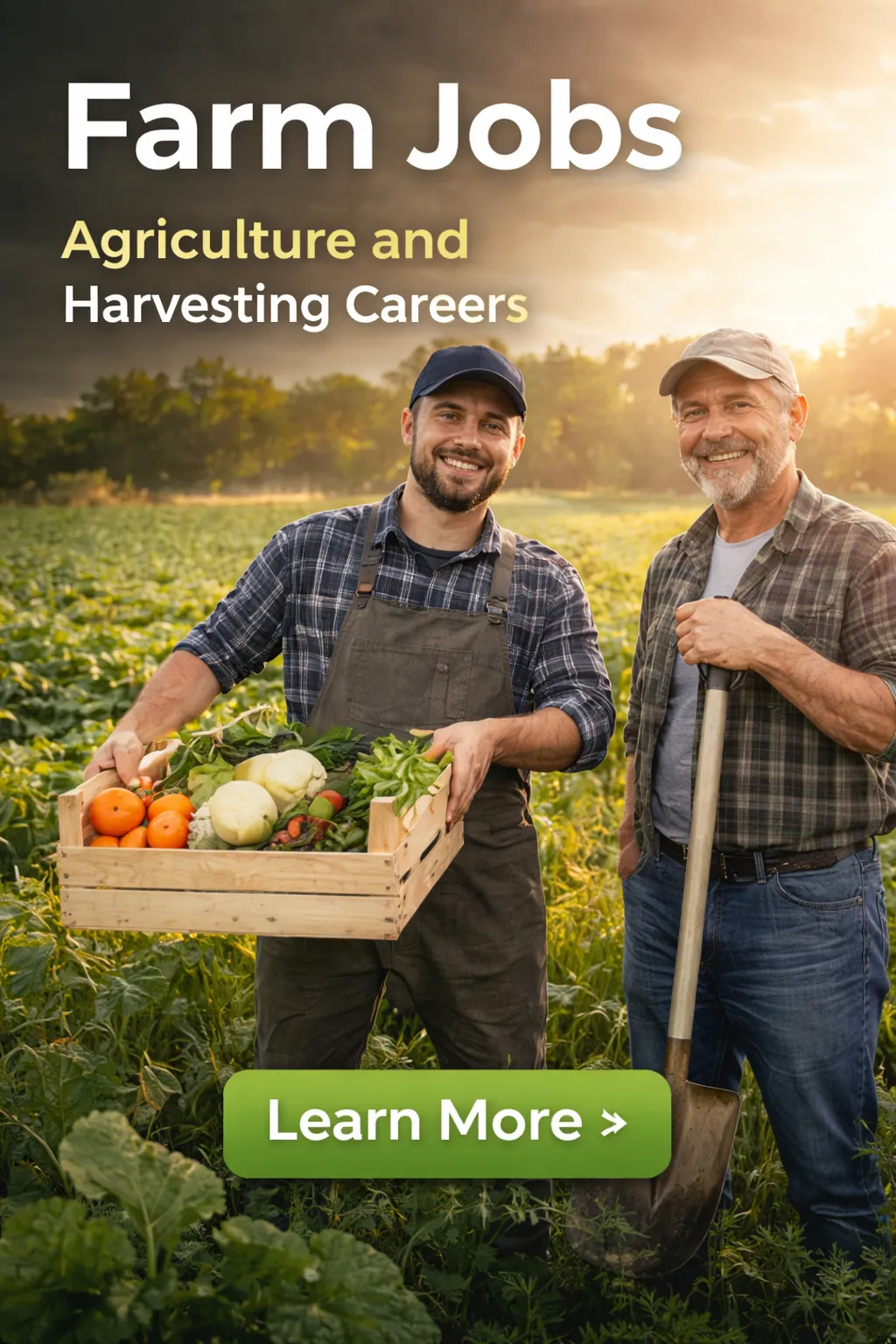
Farm Jobs
Farm Jobs and Agriculture Work
Farm jobs include planting, harvesting, and animal care.
These jobs are suitable for people who:
- Enjoy outdoor work
- Are physically active
- Have basic farming knowledge
Farm work is a great way to earn in rural areas.
Farm Jobs: A Complete Guide to Finding and Building a Career in Agriculture
Farm jobs are an important source of employment in many parts of the world. Farms provide the food, plants, animals, and raw materials that people need every day. From growing crops and caring for animals to operating machinery and managing farm operations, there are many different types of work available in agriculture.
Farm jobs can be suitable for people who enjoy outdoor work, physical activities, animals, plants, and working with nature. Some positions require previous farming experience, while many entry-level jobs can be learned through practical training.
Whether you are looking for your first job, seasonal work, or a long-term career, farm work can provide valuable experience and useful skills. In this guide, we will explain the different types of farm jobs, the skills required, how to find agricultural work, and how you can build a successful career in farming.
What Are Farm Jobs?
Farm jobs are jobs related to agriculture, farming, livestock, crops, gardening, and other activities connected with food and agricultural production.
Farm workers may plant seeds, water crops, remove weeds, harvest fruits and vegetables, feed animals, clean animal areas, operate equipment, or help maintain the farm.
The work can be different depending on the type and size of the farm. A vegetable farm may need workers to plant and harvest crops, while a dairy farm may need employees to care for cows and manage milk production.
Some farms are small family businesses, while others are large commercial operations with many employees and modern machinery.
Common Types of Farm Jobs
There are many different jobs available on farms. Some require basic skills, while others require technical knowledge and experience.
1. General Farm Worker
A general farm worker helps with a variety of daily tasks. Their duties may include planting, watering, harvesting, cleaning, feeding animals, moving materials, and maintaining the farm.
This is one of the most common entry-level agricultural jobs and can be a good option for people who want to gain practical farming experience.
2. Crop Worker
Crop workers help grow and harvest agricultural products. Depending on the farm, they may work with vegetables, fruits, grains, flowers, or other plants.
Their work can include preparing soil, planting seeds, removing weeds, applying approved treatments, watering plants, and collecting crops.
3. Fruit Picker
Fruit-picking jobs are common during harvest seasons. Workers collect ripe fruit and place it into containers for transportation or processing.
Fruit picking can be physically demanding because employees may spend many hours standing, walking, bending, or working outdoors.
4. Livestock Worker
Livestock workers care for animals such as cows, sheep, goats, pigs, or other farm animals.
Their responsibilities may include feeding animals, cleaning animal areas, checking their condition, moving animals, and maintaining equipment.
People working with livestock should be patient and comfortable around animals.
5. Dairy Farm Worker
Dairy farm workers help care for dairy cattle and support milk production. Their duties may include feeding animals, cleaning facilities, monitoring cattle, and assisting with milking operations.
Modern dairy farms may use automated equipment, so basic technical knowledge can be useful.
6. Poultry Farm Worker
Poultry workers care for chickens, turkeys, or other birds. Their duties may include feeding birds, collecting eggs, cleaning areas, checking equipment, and maintaining proper conditions.
Attention to cleanliness and following farm procedures are especially important in poultry work.
7. Tractor and Machinery Operator
Modern farms use tractors, harvesters, irrigation equipment, and other machinery.
Machinery operators use this equipment for tasks such as preparing fields, planting, harvesting, transporting materials, and maintaining farmland.
These jobs usually require training and practical experience.
8. Farm Supervisor
A farm supervisor helps manage workers and daily farm activities. They may organize schedules, assign tasks, monitor work, check crops or animals, and report progress to farm management.
Supervisory positions usually require farming experience and good communication skills.
Skills Needed for Farm Jobs
Farm work can require a combination of physical, practical, and communication skills.
Physical Fitness
Many agricultural jobs involve walking, lifting, bending, standing, and working outdoors. Workers should be prepared for physical activity during their shifts.
However, not every farm job is equally demanding. Machinery, technology, and specialized equipment can reduce some physical tasks.
Willingness to Work Outdoors
Farm workers often spend a large part of their working day outside. Weather conditions can change, so workers should be prepared for sunlight, heat, cold, wind, or rain depending on the season and location.
Teamwork
Farming is often a team effort. Workers need to communicate with supervisors and coworkers to complete planting, harvesting, animal care, and other tasks efficiently.
Reliability
Farm work often follows a schedule. Animals need regular care, and crops may need attention at specific times.
Being punctual and dependable is therefore very important.
Attention to Detail
Workers need to notice changes in crops, animals, equipment, and farm conditions.
For example, identifying a damaged plant or an equipment problem early can help prevent larger problems.
Basic Machinery Skills
Learning to operate farm machinery safely can be a valuable skill. Workers with experience using tractors, irrigation systems, or other equipment may have access to more specialized positions.
Education and Training for Farm Jobs
Many entry-level farm jobs do not require a university degree. Employers may provide practical training to new workers.
However, specialized agricultural positions may require education or certificates. Jobs involving machinery, animal health, agricultural technology, or farm management may require additional training.
People interested in agriculture can also study subjects such as farming, horticulture, animal science, agricultural technology, or farm management.
Practical experience is highly valuable. Working on a farm, completing an internship, or learning from experienced farmers can help you understand the daily responsibilities of agricultural work.
Farm Jobs for Beginners
Farm work can be a good option for people looking for their first job.
Entry-level positions may include general farm worker, fruit picker, crop worker, livestock assistant, or farm helper.
You may not need years of experience to apply for these positions. Employers may be more interested in your reliability, physical ability, willingness to learn, and attitude toward work.
If you are new to farming, start with basic tasks and learn from experienced workers. Over time, you can develop specialized skills and apply for better positions.
Seasonal Farm Jobs
Many farms hire additional workers during planting and harvesting seasons.
Seasonal farm jobs can be useful for people who want temporary employment or work experience. Fruit picking, vegetable harvesting, packing, and crop maintenance are examples of seasonal work.
The length of seasonal employment depends on the crop and location.
Before accepting a seasonal job, ask the employer about the expected working period, daily hours, wages, accommodation if offered, transportation, and other conditions.
Always make sure you understand the employment terms before starting work.
How to Find Farm Jobs
There are several ways to search for farm employment.
Online job websites can provide agricultural vacancies. Search for terms such as “farm worker,” “agricultural worker,” “fruit picker,” “livestock worker,” “dairy farm worker,” or “tractor operator.”
You can also contact farms and agricultural companies directly.
Local employment agencies may have information about available farm positions. Community groups and agricultural organizations can also be useful sources of information.
If you are searching for seasonal work, start looking before the busy farming season begins. Many farms recruit workers in advance.
When applying, carefully check the job location, duties, working hours, salary, and other employment conditions.
How to Prepare a CV for a Farm Job
A CV can help an employer understand your experience and skills.
Include your name and contact information at the top. Then add a short summary describing the type of agricultural work you are looking for.
List your previous work experience, even if it was outside farming. Jobs involving construction, gardening, warehouse work, animal care, driving, or outdoor labor may provide useful transferable skills.
If you have operated tractors or other machinery, mention this clearly.
You should also include relevant training, certificates, education, and practical skills.
Keep your CV simple and easy to read. Check it carefully for spelling mistakes before sending it.
Farm Job Interview Tips
If you are invited to an interview, prepare by learning about the farm and the position.
Be ready to explain why you want to work in agriculture and what experience you have.
Common questions may include:
- Have you worked on a farm before?
- Are you comfortable working outdoors?
- Can you perform physical tasks?
- Have you worked with animals?
- Can you operate farm machinery?
- Are you available during the harvest season?
- Can you work as part of a team?
Answer honestly. If you do not have experience, explain that you are willing to learn.
Arrive on time and dress appropriately for the interview. Show the employer that you are responsible, hardworking, and dependable.
Advantages of Farm Jobs
Farm jobs have several advantages.
One benefit is the opportunity to work outdoors and stay active. People who do not enjoy sitting at a desk all day may prefer agricultural work.
Farm jobs can also provide practical skills that are useful throughout life. Workers can learn about crops, animals, machinery, food production, and land management.
Another advantage is career development. An entry-level worker can gain experience and eventually move into skilled agricultural, supervisory, or management positions.
Agriculture is also an important industry because people will always need food and other agricultural products. This creates a wide range of employment opportunities.
Challenges of Farm Work
Farm work can also be challenging.
Many positions require physical effort, especially during planting and harvest seasons. Employees may need to work for long periods outdoors.
Weather can also affect working conditions. Hot, cold, wet, or windy conditions may make certain tasks more difficult.
Some farm jobs involve early mornings or long working days, particularly when animals need regular care or crops must be harvested quickly.
Workers should also follow safety procedures when using tools, machinery, and agricultural products.
Understanding these challenges can help you decide whether farm work is right for you.
Farm Work and Safety
Safety is extremely important in agriculture.
Workers should receive proper instructions before using machinery, tools, or equipment. Never operate a machine unless you have been trained and authorized to use it.
Wear suitable clothing and protective equipment when required.
When working outdoors, protect yourself from the weather and drink enough water during hot conditions.
Workers should also handle animals carefully and follow instructions from experienced supervisors.
If you notice damaged equipment, unsafe conditions, or another workplace hazard, report it to the appropriate person.
Following safety procedures helps protect you and your coworkers.
Career Growth in Agriculture
A farm job can become the beginning of a long-term agricultural career.
A worker may start as a general farm assistant and gain experience in crop production, livestock care, machinery operation, or another area.
With additional training, workers can move into specialized positions such as machinery operator, agricultural technician, livestock specialist, crop supervisor, or farm manager.
People who want to manage their own farm can also use their experience to learn about business planning, budgeting, crop management, animal care, and marketing.
Continuous learning is important because modern agriculture is changing quickly. Technology such as automated machinery, irrigation systems, sensors, and digital farm management tools is becoming more common.
Tips for Succeeding in a Farm Job
If you get a farm job, take your responsibilities seriously from the beginning.
Arrive on time and follow instructions carefully. Farming often depends on timing, so completing tasks when required is important.
Take care of tools and machinery and report problems as soon as you notice them.
Be respectful toward supervisors and coworkers. Good teamwork can make difficult tasks easier.
Pay attention when experienced workers teach you something new. Practical knowledge can be extremely valuable in agriculture.
Most importantly, keep improving your skills. Learning how to operate machinery, care for animals, manage crops, or use modern agricultural technology can help you qualify for better opportunities.
Frequently Asked Questions About Farm Jobs
Do I need experience to work on a farm?
Not always. Many farms offer entry-level positions where workers can learn through practical training.
Are farm jobs physically demanding?
Some farm jobs are physically demanding and may involve standing, walking, lifting, bending, or working outdoors. The physical requirements depend on the position.
Can farm jobs be seasonal?
Yes. Many farms hire additional workers during planting and harvesting seasons, particularly for fruit and vegetable production.
What skills are useful for farm work?
Reliability, physical fitness, teamwork, attention to detail, willingness to learn, and basic machinery skills can all be useful.
Can farm work become a career?
Yes. With experience and training, workers can progress into skilled, supervisory, technical, and management positions.
Conclusion
Farm jobs provide important employment opportunities for people who enjoy practical work, outdoor environments, agriculture, plants, and animals. There are many different positions available, including general farm workers, crop workers, fruit pickers, livestock workers, machinery operators, maintenance workers, and farm supervisors.
For beginners, farm work can be an excellent way to gain practical experience and develop useful skills. You do not always need advanced education to get started. A strong work ethic, reliability, teamwork, and willingness to learn can help you succeed.
If you are searching for a farm job, prepare a simple CV, look for vacancies regularly, and apply for positions that match your abilities. Always understand the working conditions, hours, pay, and responsibilities before accepting a position.
Farm work can be challenging, but it can also be rewarding. With experience, training, and dedication, a simple farm job can become the first step toward a skilled agricultural career or even your own future farming business.