Cleaner Jobs
Cleaner Jobs Opportunities
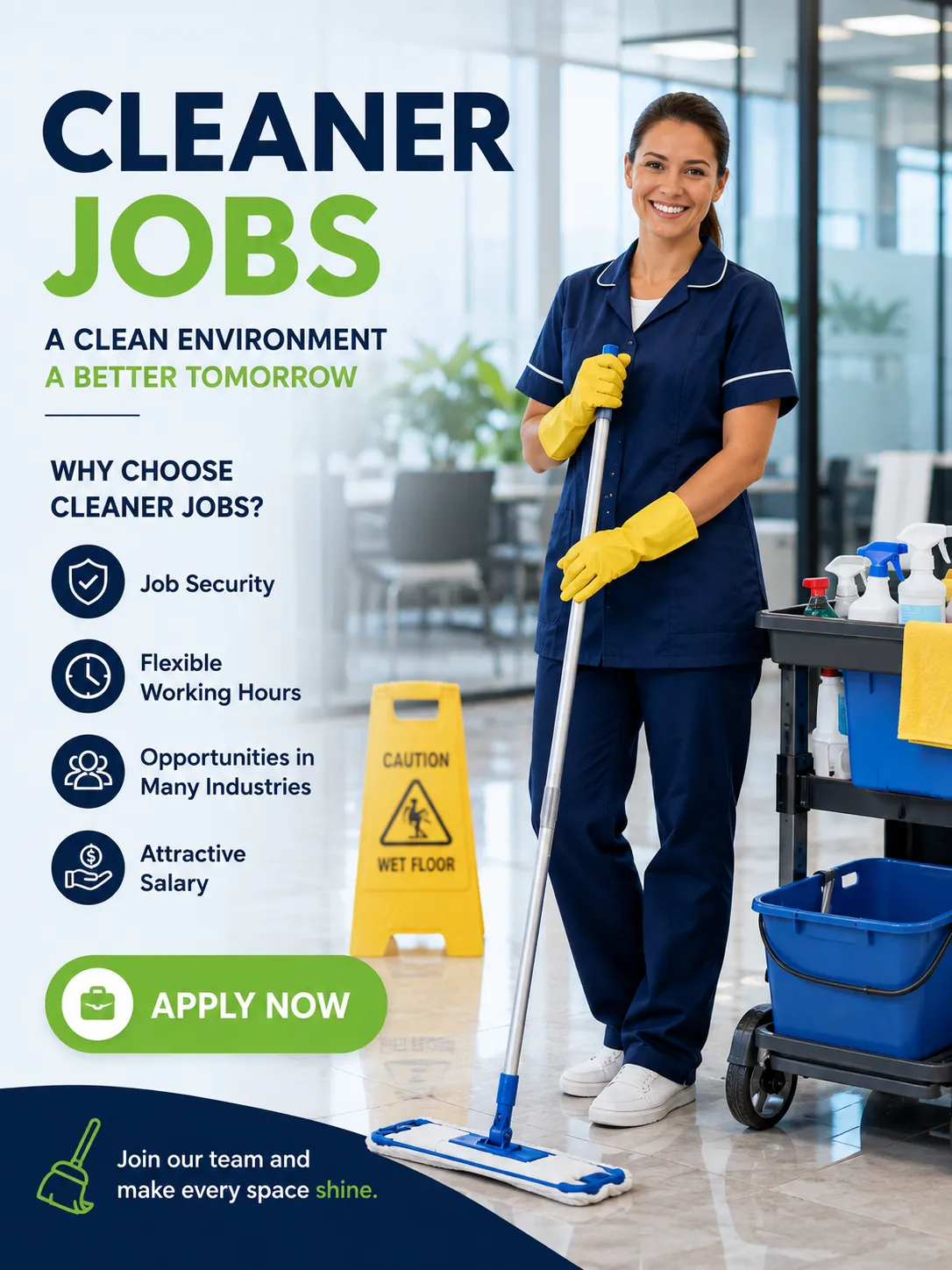
Cleaner jobs are important in maintaining hygiene in offices, hotels, and public places.
These jobs usually require:
- Basic cleaning skills
- Attention to detail
- Hardworking attitude
No high education is required, making it a good option for many job seekers.
Cleaner Jobs: A Complete Guide to Finding and Building a Career in Cleaning
Cleaner jobs are an important part of almost every workplace and community. Cleaners help keep homes, offices, hotels, hospitals, schools, shops, factories, and public buildings clean, safe, and comfortable. Although cleaning work is sometimes overlooked, it is an essential service that people and businesses depend on every day.
Cleaning can be a good job for people who are hardworking, responsible, organized, and comfortable with physical work. Many entry-level cleaning positions do not require a university degree or years of experience. New workers can often learn the job through basic training and practical experience.
There are also many different types of cleaning jobs. Some cleaners work in offices, while others work in hotels, hospitals, schools, factories, restaurants, or private homes. With experience, a cleaner can also move into supervisory or management positions.
In this guide, we will discuss different types of cleaner jobs, the skills you need, how to find cleaning work, how to prepare for an interview, and how to build a successful career in the cleaning industry.
What Is a Cleaner Job?
A cleaner is responsible for maintaining cleanliness and hygiene in a particular building, room, workplace, or public area. Cleaning duties depend on the workplace and the type of position.
Common tasks may include sweeping floors, mopping, vacuuming carpets, cleaning bathrooms, removing rubbish, dusting furniture, washing windows, and keeping supplies organized.
Professional cleaners may also use specialized equipment and cleaning products. They are usually expected to follow workplace instructions and safety procedures carefully.
Some cleaners work independently, while others are part of a larger cleaning team. Working hours can also vary. Some positions are available during the day, while others may require evening, night, weekend, or early morning shifts.
Common Types of Cleaner Jobs
There are many different cleaning positions available. Choosing the right one depends on your interests, experience, and preferred working environment.
1. Office Cleaner
Office cleaners keep workplaces clean and organized. Their duties may include cleaning desks, floors, meeting rooms, kitchens, toilets, and common areas.
Many office cleaners work before or after normal business hours so that employees can work without disruption.
This job can be suitable for people who prefer a quiet and organized working environment.
2. Hotel Cleaner or Housekeeper
Hotel cleaners, often called housekeepers, prepare guest rooms and maintain cleanliness throughout the hotel.
Their work may include changing bedsheets, cleaning bathrooms, replacing towels, dusting furniture, vacuuming floors, and preparing rooms for new guests.
Attention to detail is important because guests expect hotel rooms to be clean and comfortable.
3. Hospital Cleaner
Hospital cleaning is a specialized type of cleaning work. Cleaners help maintain hygiene in patient rooms, hallways, waiting areas, offices, and other parts of healthcare facilities.
Hospital cleaners need to follow strict cleaning and hygiene procedures. Training is often provided because cleanliness is particularly important in healthcare environments.
4. School Cleaner
School cleaners maintain classrooms, hallways, bathrooms, offices, cafeterias, and other areas.
They may work before school starts, after classes finish, or during other scheduled hours.
School cleaning requires responsibility because cleaners work in an environment used by students and staff.
5. House Cleaner
House cleaners work in private homes and apartments. They may clean bedrooms, kitchens, bathrooms, living rooms, floors, windows, and other areas.
Some house cleaners work directly for families, while others work for cleaning companies.
Good communication is important because every customer may have different cleaning preferences.
6. Industrial Cleaner
Industrial cleaners work in factories, warehouses, workshops, and other industrial environments.
Their duties can be more demanding than normal household cleaning and may involve specialized equipment or procedures.
Industrial cleaners must follow safety instructions carefully and use appropriate protective equipment when required.
7. Window Cleaner
Window cleaners specialize in cleaning windows and glass surfaces.
They may work in homes, offices, shops, hotels, and other buildings. Some jobs may involve working at height, so proper training and safety equipment are essential.
8. Public Area Cleaner
Public area cleaners maintain places such as shopping centers, transportation facilities, parks, public buildings, and other shared spaces.
Their work helps create clean and pleasant environments for the public.
Skills Needed for Cleaner Jobs
Cleaning may look simple, but professional cleaners need several important skills.
Attention to Detail
A good cleaner notices areas that other people might miss. This can include corners, surfaces, windows, floors, and areas behind furniture.
Attention to detail helps ensure that the entire area is properly cleaned.
Time Management
Cleaners often have a specific amount of time to complete their work. For example, a hotel housekeeper may need to prepare several rooms during one shift.
Good time management helps workers complete tasks efficiently.
Physical Fitness
Cleaning can involve standing, walking, bending, lifting, pushing equipment, and moving around for several hours.
Workers should understand the physical requirements of the job and use safe working methods.
Reliability
Employers and customers depend on cleaners to arrive on time and complete their responsibilities.
Being punctual and dependable can help you build a good reputation and keep your job.
Communication
Cleaners may need to communicate with supervisors, coworkers, customers, hotel guests, office employees, or other people.
Good communication helps prevent misunderstandings and makes it easier to understand instructions.
Organization
A cleaner needs to know which tasks should be completed first and which cleaning supplies are required.
Staying organized can make work faster and more effective.
Do You Need Experience to Become a Cleaner?
Many cleaner jobs are available to people without previous professional experience.
Entry-level employers may provide basic training on cleaning methods, equipment, products, and workplace safety.
Previous experience can still be helpful, especially for specialized positions such as industrial cleaning, hospital cleaning, or supervisory work.
If you are applying for your first cleaning job, focus on your reliability, willingness to learn, physical ability, attention to detail, and positive attitude.
Education and Training for Cleaning Jobs
Most basic cleaning positions do not require a university degree. However, some specialized jobs may require training or certification.
Employers may provide training when you start working. This can include instructions about cleaning procedures, equipment, chemicals, protective clothing, and workplace safety.
Learning how to use modern cleaning equipment can also improve your career opportunities.
If you want to become a supervisor or cleaning manager, additional experience and management skills can be useful.
How to Find Cleaner Jobs
There are many ways to find cleaning jobs.
Online job websites often advertise vacancies for cleaners, housekeepers, janitors, and cleaning assistants. You can search using terms such as “cleaner,” “office cleaner,” “hotel housekeeping,” “housekeeper,” or “cleaning assistant.”
You can also contact cleaning companies directly and ask about available positions.
Hotels, schools, hospitals, offices, shopping centers, factories, and other businesses may advertise cleaning jobs on their websites or through local employment agencies.
Another useful method is to ask people you know. Cleaning jobs are sometimes found through personal recommendations.
When searching for work, check the location, working hours, duties, salary, and employment conditions before applying.
How to Prepare a CV for a Cleaner Job
A simple and clear CV is usually best for an entry-level cleaning position.
Start with your name and contact information. Then write a short summary explaining that you are interested in cleaning work and mention your strongest qualities.
List previous work experience, even if it was not a cleaning job. Experience in hotels, restaurants, offices, warehouses, construction, retail, or other practical work may demonstrate useful skills.
Include relevant skills such as cleaning, organization, time management, teamwork, customer service, and equipment handling.
If you have completed any cleaning or safety training, mention it in your CV.
Always check your CV for spelling and grammar mistakes before submitting it.
How to Prepare for a Cleaner Job Interview
A cleaning job interview may be simple, but you should still prepare.
The employer may ask about your previous experience, availability, physical ability, and knowledge of cleaning tasks.
Some common questions include:
- Why do you want to work as a cleaner?
- Have you worked as a cleaner before?
- What cleaning tasks can you perform?
- Can you work independently?
- Can you work as part of a team?
- Are you available for evening or weekend shifts?
- How would you deal with a difficult customer?
- What would you do if you noticed a safety problem?
Answer honestly and confidently.
If you have no previous experience, explain that you are willing to learn and follow instructions.
Arrive on time and dress neatly. A professional attitude can make a positive impression.
Cleaning Equipment and Products
Professional cleaners may use a variety of tools and equipment.
Common cleaning tools include mops, brooms, brushes, vacuum cleaners, buckets, cloths, dusters, and cleaning carts.
Some workplaces may also use floor-cleaning machines, carpet cleaners, pressure washers, or specialized equipment.
Cleaners should understand how to use equipment safely and follow the manufacturer’s or employer’s instructions.
Cleaning products should also be handled carefully. Workers should never mix products unless they are specifically instructed and trained to do so.
Proper storage and labeling of cleaning products are also important.
Cleaning Jobs and Safety
Safety should always be a priority for professional cleaners.
Some cleaning products can irritate the skin, eyes, or breathing system if they are used incorrectly. Workers should follow product instructions and workplace safety procedures.
Protective equipment such as gloves, masks, safety shoes, or eye protection may be required for certain tasks.
Wet floors can also create slip hazards. Cleaners should use appropriate warning signs when necessary and keep work areas safe.
Workers should also use proper techniques when lifting or moving heavy objects.
If you are unsure how to perform a task safely, ask your supervisor for guidance.
Advantages of Cleaner Jobs
Cleaning jobs have several advantages.
One major benefit is that many entry-level positions do not require advanced education. This makes cleaning accessible to people who are starting their careers or changing jobs.
Cleaning work is also needed in many industries, including hotels, offices, schools, hospitals, homes, factories, and public buildings.
There are often different schedules available. Some people may prefer daytime work, while others may look for evening or early morning shifts.
Cleaning jobs can also provide valuable experience in responsibility, customer service, teamwork, and time management.
With experience, workers can move into senior positions or start their own cleaning business.
Challenges of Cleaner Jobs
Cleaning work can be physically demanding. Workers may spend many hours standing, walking, bending, or carrying equipment.
Some cleaning jobs may also involve working with unpleasant smells, dirty areas, or difficult cleaning tasks.
Working hours can vary, and some positions require early mornings, evenings, weekends, or holidays.
Certain environments can also have specific safety risks, so workers need to follow instructions carefully.
Despite these challenges, many people find cleaning work rewarding because they can see the results of their efforts at the end of each shift.
Career Growth in the Cleaning Industry
A cleaner job can become more than an entry-level position.
With experience, a cleaner may become a senior cleaner or team leader. Team leaders may organize daily tasks, check cleaning quality, train new employees, and communicate with supervisors.
Experienced workers can also become cleaning supervisors or managers.
Another option is to specialize in areas such as hotel housekeeping, industrial cleaning, window cleaning, carpet cleaning, or specialized facility cleaning.
Some experienced cleaners eventually start their own cleaning companies and provide services to homes and businesses.
Tips for Succeeding as a Cleaner
If you get a cleaning job, take your responsibilities seriously.
Arrive on time and complete your assigned tasks properly. Do not rush through your work if doing so reduces cleaning quality.
Pay attention to details and check your work before leaving an area.
Take care of cleaning equipment and report damaged tools or other problems to your supervisor.
Be respectful to customers, guests, coworkers, and managers.
Follow all safety instructions, especially when using cleaning products or equipment.
Try to learn new techniques and improve your skills. The more reliable and skilled you become, the more opportunities you may have for better positions.
Frequently Asked Questions About Cleaner Jobs
Do cleaner jobs require qualifications?
Many entry-level cleaning jobs do not require formal qualifications. Employers may provide training after hiring.
Can I get a cleaner job without experience?
Yes. Many employers hire beginners who are reliable, hardworking, and willing to learn.
Are cleaning jobs physically difficult?
Some cleaning jobs can be physically demanding because they involve standing, walking, bending, lifting, and repetitive tasks.
Where can cleaners work?
Cleaners can work in homes, hotels, offices, schools, hospitals, factories, shops, restaurants, warehouses, and public buildings.
Can cleaning become a career?
Yes. Cleaners can progress to team leaders, supervisors, managers, specialized cleaning roles, or even start their own cleaning business.
Conclusion
Cleaner jobs are an important part of everyday life. Cleaners help businesses, homes, hotels, hospitals, schools, factories, and public places remain clean, safe, and comfortable.
For people looking for an entry-level job, cleaning can be a practical career choice because many positions do not require advanced education or extensive experience. A good work ethic, reliability, attention to detail, and willingness to learn can help you succeed.
If you are searching for a cleaner job, prepare a simple CV, search for vacancies regularly, and apply to positions that match your skills and availability. Before accepting a job, make sure you understand the working hours, responsibilities, pay, and safety requirements.
Cleaning work can be challenging, but it can also provide stable experience and opportunities for career growth. With dedication and professional behavior, a cleaner can develop valuable skills, move into supervisory positions, specialize in a particular area, or eventually build a successful cleaning business.