Warehouse Jobs:
Complete Guide to Finding and Building a Career in Warehouse
Warehouse jobs are an important part of the modern supply chain. Almost every product people buy, from food and clothing to electronics and household items, may pass through a warehouse before reaching a store or customer. Because businesses need people to receive, organize, store, pack, and move products, warehouses provide many employment opportunities.
Warehouse work can be a good choice for people who enjoy practical and active jobs. Many entry-level positions do not require a university degree or extensive experience. Employers may provide training to new workers, allowing them to learn workplace procedures and develop useful skills.
There are also opportunities for career growth. A warehouse worker can gain experience and move into positions such as team leader, inventory clerk, forklift operator, warehouse supervisor, or logistics coordinator.
This guide explains what warehouse jobs involve, the common types of warehouse positions, the skills employers look for, how to find warehouse work, and how to build a successful career in the industry.
What Is a Warehouse Job?
A warehouse job involves helping a company receive, store, organize, prepare, and ship products or materials.
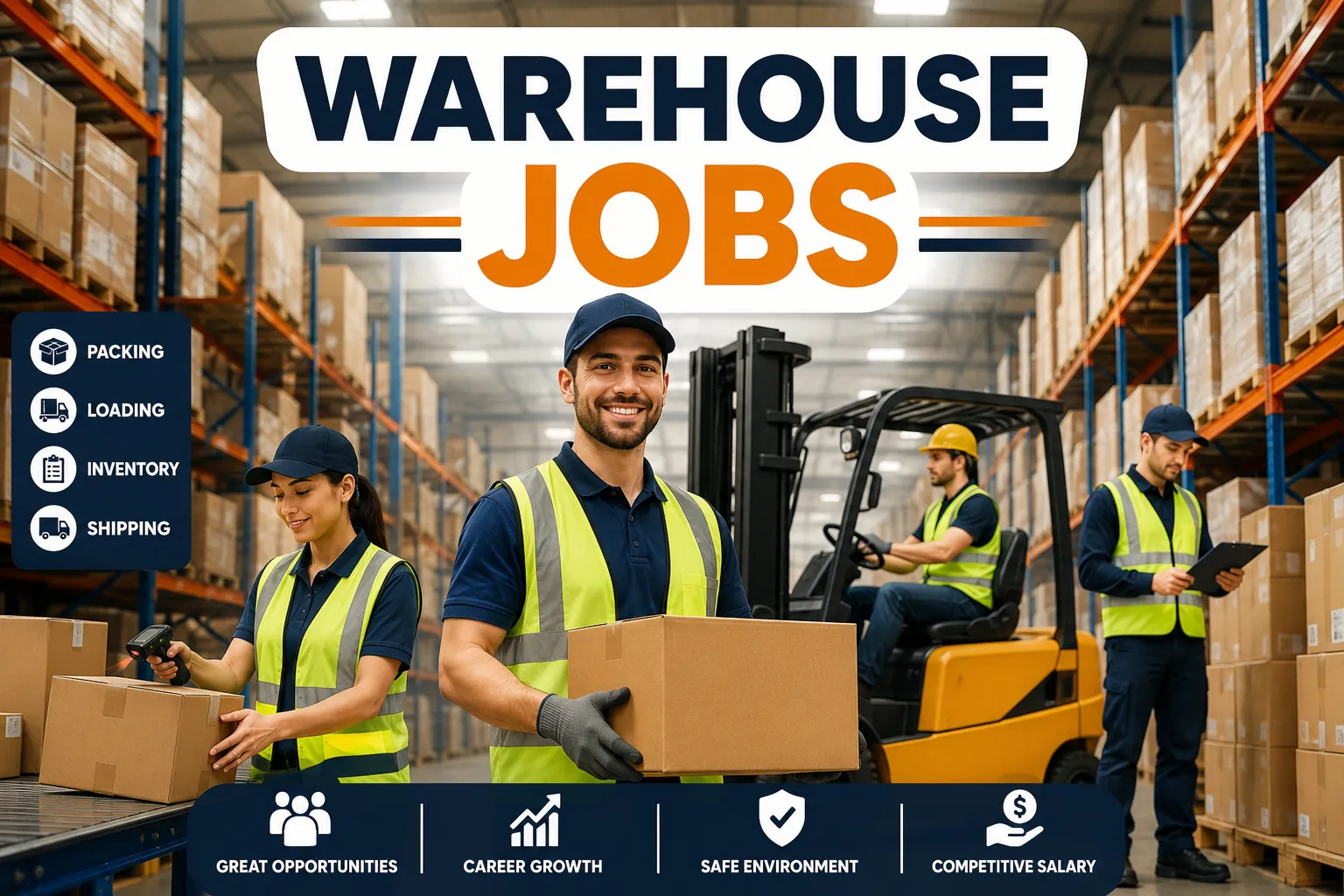
Warehouse employees perform different tasks depending on the company. Some workers unload deliveries, while others organize products on shelves, pick customer orders, pack boxes, check inventory, or prepare shipments.
Modern warehouses may use computers, barcode scanners, conveyor systems, forklifts, and other technology to manage products efficiently.
Warehouse work is common in many industries, including retail, manufacturing, food distribution, e-commerce, transportation, and logistics.
Common Types of Warehouse Jobs
There are many different positions available in warehouses. Some are suitable for beginners, while others require specific training or experience.
1. Warehouse Worker
A general warehouse worker performs a variety of tasks. Duties may include receiving goods, moving products, organizing storage areas, packing orders, cleaning workspaces, and assisting other employees.
This is often a good entry-level position for people who want to gain experience in logistics.
2. Picker and Packer
Pickers locate products in the warehouse according to customer or company orders. Packers then prepare those products for shipping.
Workers may use lists, computers, or barcode scanners to make sure the correct items are selected.
Accuracy is very important because sending the wrong product can cause delays and customer complaints.
3. Forklift Operator
Forklift operators use forklifts to move heavy products and materials around the warehouse.
This position usually requires appropriate training and authorization under local workplace rules.
Forklift operators must pay close attention to safety because they work around people, shelves, vehicles, and heavy loads.
4. Warehouse Receiver
Receiving employees handle incoming deliveries. They may unload goods, check quantities, inspect packages, record information, and move products to the correct storage areas.
Good attention to detail is important because incorrect inventory information can create problems later.
5. Inventory Clerk
Inventory clerks help track products stored in a warehouse.
They may use computer systems or scanners to record stock levels, update records, investigate differences, and help with inventory counts.
Basic computer skills can be useful for this position.
6. Shipping Clerk
Shipping clerks prepare orders for delivery. They may check packages, print labels, organize shipments, prepare documents, and communicate with delivery companies.
Organization and accuracy are important because shipping errors can cause delays.
7. Warehouse Supervisor
A warehouse supervisor manages employees and helps coordinate daily operations.
Responsibilities may include assigning tasks, monitoring productivity, checking safety procedures, training employees, and solving operational problems.
Supervisory roles usually require previous warehouse experience.
Skills Needed for Warehouse Jobs
Warehouse workers need a combination of physical, technical, and personal skills.
Physical Fitness
Many warehouse jobs involve standing, walking, bending, lifting, and moving products.
The physical requirements depend on the position. Some jobs may involve heavier materials, while others may rely more on machines and equipment.
Always understand the physical requirements of a position before accepting a job.
Attention to Detail
Warehouse employees need to select the correct products, quantities, labels, and locations.
A small mistake can result in the wrong order being shipped.
Paying attention to details helps maintain accurate inventory and efficient operations.
Teamwork
Warehouses usually operate through teamwork. Employees may need to coordinate with supervisors, drivers, inventory staff, shipping teams, and other workers.
Being cooperative and respectful can help create a productive workplace.
Time Management
Warehouses often have deadlines for receiving and shipping products.
Employees need to complete tasks efficiently while maintaining accuracy and safety.
Good time management can help workers handle busy periods.
Basic Computer Skills
Modern warehouses increasingly use digital systems.
Employees may use computers, tablets, barcode scanners, inventory software, and other technology.
Basic computer knowledge can therefore be valuable, especially for inventory and administrative positions.
Education and Training Requirements
Many entry-level warehouse jobs do not require a college degree.
Employers may provide on-the-job training covering workplace procedures, equipment, safety, inventory systems, and company policies.
Some specialized positions require additional training. For example, forklift operators may need specific training and authorization.
Warehouse supervisors and logistics positions may benefit from additional education or experience in supply chain management, business, or logistics.
If you are interested in progressing in this industry, consider learning inventory management, computer systems, workplace safety, and logistics.
Warehouse Jobs for Beginners
Warehouse work can be a good starting point for people with little or no professional experience.
Entry-level positions may include warehouse assistant, picker, packer, general warehouse worker, or shipping helper.
Employers often look for people who are reliable, punctual, physically capable of performing the required work, and willing to learn.
Previous experience is not always necessary.
If you are starting your first warehouse job, listen carefully to your trainer and supervisor. Learn how the warehouse operates and follow all safety procedures.
With time and experience, you can apply for more specialized positions.
How to Find Warehouse Jobs
There are several ways to find warehouse employment.
Online job websites often list warehouse vacancies. Search for terms such as “warehouse worker,” “warehouse assistant,” “picker packer,” “inventory clerk,” “forklift operator,” or “shipping clerk.”
You can also check the careers pages of logistics companies, retailers, manufacturers, delivery businesses, and e-commerce companies.
Employment agencies may also help connect workers with warehouses that are hiring.
Another option is to contact local companies directly and ask about available positions.
When applying, check the job description carefully. Look at the location, working hours, required skills, physical requirements, pay, and other conditions.
How to Prepare a Warehouse Job CV
A good CV should clearly explain your experience and skills.
Start with your name and contact information. Then write a short professional summary describing your interest in warehouse work.
Include your previous employment, education, training, and relevant skills.
If you have worked in factories, construction, retail, delivery, transportation, or other practical jobs, mention this experience because it may provide transferable skills.
If you have experience with forklifts, inventory systems, scanners, packing, loading, unloading, or shipping, make sure to include it.
If you have no previous warehouse experience, highlight skills such as teamwork, reliability, organization, time management, and willingness to learn.
Keep your CV simple, accurate, and easy to read.
Preparing for a Warehouse Job Interview
A warehouse job interview may include questions about your experience, physical ability, availability, teamwork, and safety awareness.
Common questions include:
- Why do you want to work in a warehouse?
- Do you have previous warehouse experience?
- Have you worked with inventory?
- Have you used a forklift or other equipment?
- Can you work as part of a team?
- Are you comfortable working different shifts?
- How do you handle repetitive tasks?
- What would you do if you noticed a safety problem?
Answer honestly.
If you do not have experience, explain that you are willing to learn and follow instructions.
Arrive on time and dress appropriately. Show the employer that you are responsible and serious about the position.
Warehouse Working Hours and Shifts
Warehouse schedules can vary depending on the business.
Some warehouses operate during normal daytime hours, while others operate throughout the day and night.
Employees may work morning, evening, or night shifts. Weekend work may also be required during busy periods.
E-commerce and delivery companies may have particularly busy periods when demand increases.
Before accepting a warehouse job, ask about shift times, breaks, overtime, days off, and other scheduling requirements.
Warehouse Safety
Safety is one of the most important parts of warehouse work.
Employees may work around forklifts, shelves, loading areas, conveyor systems, heavy products, and moving vehicles.
Workers should follow all safety instructions and use required protective equipment.
Never operate machinery unless you have received the required training and authorization.
Keep walkways and work areas clear. Be careful when lifting or moving products, and use appropriate equipment when required.
Report damaged equipment, unsafe conditions, spills, or other hazards to a supervisor.
Do not rush a task if rushing creates a safety risk.
A safe workplace depends on every employee taking responsibility.
Advantages of Warehouse Jobs
Warehouse jobs offer several benefits.
One major advantage is that many entry-level positions do not require advanced education.
Warehouses are also found in many industries, creating a wide range of employment opportunities.
Warehouse work can help employees develop practical skills such as inventory management, teamwork, organization, time management, and equipment operation.
Another advantage is career growth. Employees who gain experience may move into specialized or supervisory positions.
Some warehouses also offer different shifts, which may be useful for people who need flexible working hours.
Challenges of Warehouse Work
Warehouse jobs can also be demanding.
Some positions involve physical work, repetitive movements, standing, walking, or lifting.
Busy periods can create pressure because employees may need to process a large number of orders within a limited time.
Working night shifts or changing schedules can also be difficult for some people.
Warehouses may sometimes be noisy or have different temperatures depending on the type of products and facility.
Following safety procedures, taking appropriate breaks, and using equipment correctly can help employees manage the challenges of warehouse work.
Technology in Modern Warehouses
Technology is becoming increasingly important in warehouse operations.
Many warehouses use barcode scanners, inventory management software, automated storage systems, conveyor belts, and other digital tools.
Employees may need to scan products, update inventory information, or use handheld devices to locate items.
Learning basic technology can make it easier to adapt to modern warehouse environments.
Workers who develop technical skills may also have opportunities to move into inventory, logistics, or supervisory positions.
Career Growth in Warehouse Work
A warehouse job can provide a path toward a long-term career.
A worker may begin as a general warehouse assistant and later become a picker, inventory clerk, forklift operator, team leader, or supervisor.
With additional training and experience, employees can move into logistics coordination, warehouse management, supply chain roles, or other areas of the industry.
Career growth depends on performance, experience, skills, training, and available opportunities.
Employees who show reliability, leadership, and a willingness to learn may be considered for additional responsibilities.
Tips for Succeeding in a Warehouse Job
If you start working in a warehouse, try to build a good reputation from your first day.
Arrive on time and follow your assigned schedule.
Listen carefully to instructions and ask questions when you are unsure about a task.
Work efficiently, but never sacrifice safety to work faster.
Take care of warehouse equipment and report problems immediately.
Be respectful toward coworkers and supervisors.
Keep your work area organized and follow inventory procedures carefully.
Try to learn new skills and volunteer for training opportunities when appropriate.
These habits can help you become a reliable employee and improve your chances of career growth.
Frequently Asked Questions About Warehouse Jobs
Do warehouse jobs require experience?
Many entry-level warehouse jobs do not require previous experience. Employers may provide training to new workers.
Are warehouse jobs physically demanding?
Some positions can be physically demanding and may involve standing, walking, lifting, or moving products. The requirements vary by job.
Can I work in a warehouse without a university degree?
Yes. Many warehouse positions do not require a university degree. However, specialized and management roles may have additional requirements.
Do warehouse workers need computer skills?
Basic computer and technology skills are becoming increasingly useful because many warehouses use digital inventory and scanning systems.
Can warehouse workers get promoted?
Yes. With experience, training, and good performance, workers may progress to specialized, team leader, supervisory, or logistics positions.
Conclusion
Warehouse jobs provide valuable employment opportunities for people with different backgrounds and levels of experience. From picking and packing products to inventory management, shipping, receiving, equipment operation, and supervision, there are many career paths within the warehouse industry.
For beginners, warehouse work can be a practical way to gain experience and develop important workplace skills. You may not need a university degree to get started, but reliability, teamwork, attention to detail, and willingness to learn are important.
If you are searching for a warehouse job, prepare a clear CV, check job listings regularly, and apply for positions that match your skills and availability. Make sure you understand the working hours, responsibilities, physical requirements, and safety expectations before accepting a position.
Warehouse work can be challenging, especially during busy periods, but it can also provide valuable experience and opportunities for career growth. By working safely, developing new skills, and maintaining a professional attitude, you can use an entry-level warehouse job as the foundation for a successful career in logistics, distribution, and supply chain operations.