
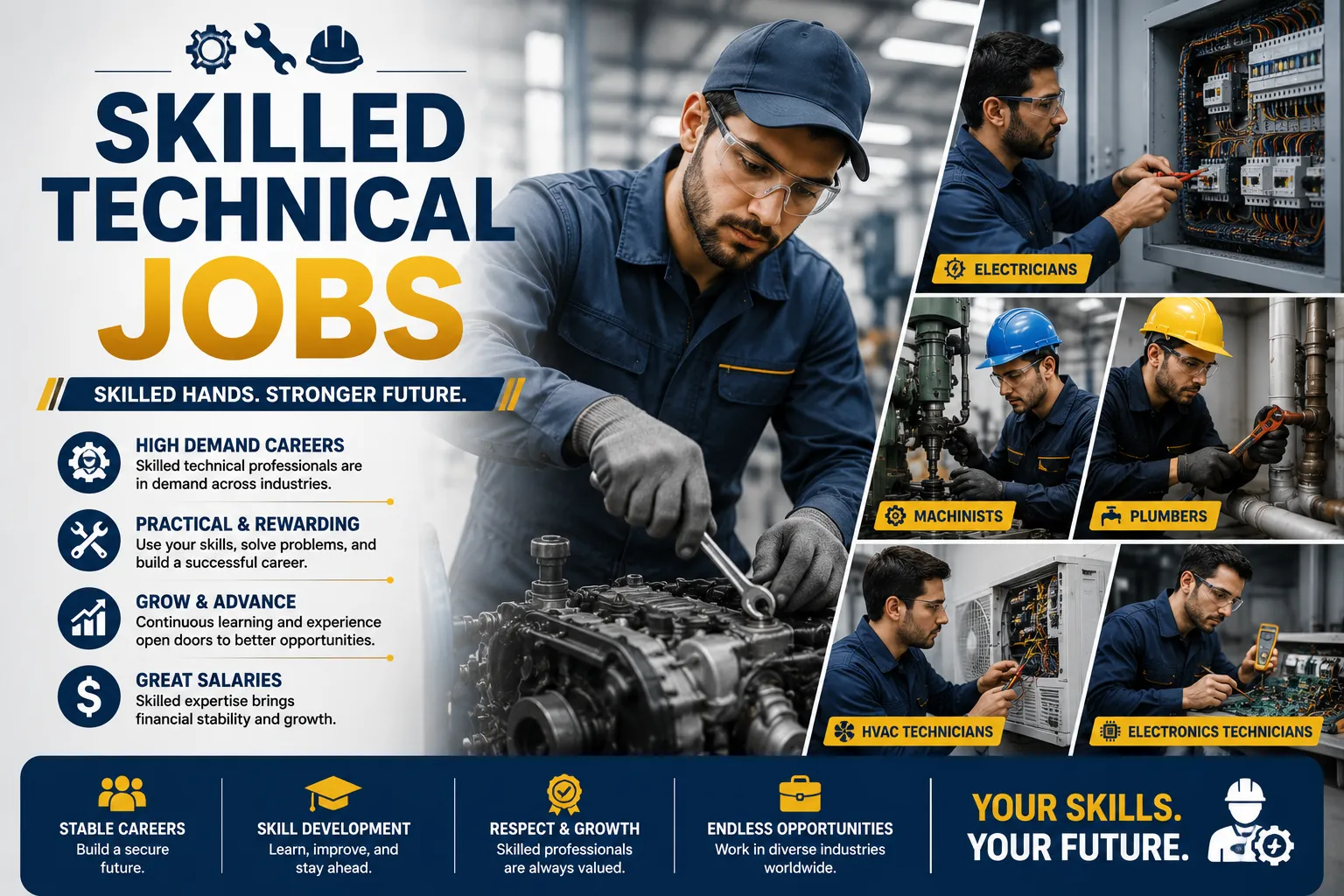
Skilled Technical Jobs: A Complete Guide to Careers, Skills, and Opportunities
Skilled technical jobs are becoming increasingly important in today’s job market. Businesses, factories, construction companies, technology firms, transportation companies, and many other industries depend on trained workers who understand machines, equipment, systems, tools, and technical processes.
Unlike many general jobs, skilled technical jobs usually require specific knowledge, practical training, technical skills, or hands-on experience. Some positions require a professional certificate, apprenticeship, diploma, or license, while others allow workers to develop their skills through on-the-job training.
Technical careers can be a good option for people who enjoy practical work, solving problems, working with equipment, and learning how things operate. They can also provide opportunities for career growth and specialization.
This guide explains what skilled technical jobs are, the most common technical careers, skills employers look for, education and training requirements, how to find technical jobs, and how to build a successful career in a skilled trade or technical field.
What Are Skilled Technical Jobs?
Skilled technical jobs are positions that require specialized knowledge and practical abilities.
Technical workers may install, operate, repair, maintain, test, or troubleshoot equipment and systems.
For example, an electrician works with electrical systems, a mechanic repairs vehicles and machinery, a network technician maintains computer networks, and an HVAC technician installs and repairs heating and cooling equipment.
The exact responsibilities depend on the industry and position.
Some skilled technical jobs are performed indoors, while others require workers to travel to different locations or work outdoors.
Why Are Skilled Technical Jobs Important?
Modern businesses rely heavily on equipment and technology.
Factories need technicians to maintain machines. Buildings need electricians and HVAC professionals. Transportation companies need mechanics. Technology businesses need technical support workers and network specialists.
When equipment stops working, trained technical workers are needed to identify the problem and find a solution.
This makes skilled technical employees an important part of many industries.
Technical careers can also provide opportunities for people who prefer practical learning instead of traditional academic education.
Types of Skilled Technical Jobs
There are many technical careers available. Some are traditional skilled trades, while others are connected to modern technology.
1. Electrician
Electricians install, maintain, and repair electrical systems.
They may work in homes, offices, factories, construction sites, and other buildings.
Their responsibilities can include installing wiring, electrical equipment, lighting systems, switches, and other components.
Electrical work requires proper training because electricity can be dangerous.
Depending on the location and type of work, electricians may need licenses, certifications, or other qualifications.
2. Automotive Technician
Automotive technicians inspect, maintain, and repair vehicles.
They may work on engines, brakes, electrical systems, tires, transmissions, and other vehicle components.
Modern vehicles also contain computer-controlled systems, so technicians increasingly need both mechanical and computer knowledge.
People who enjoy working with vehicles may find automotive technical jobs rewarding.
3. HVAC Technician
HVAC technicians work with heating, ventilation, and air conditioning systems.
They install, maintain, inspect, and repair heating and cooling equipment in homes, offices, commercial buildings, and industrial facilities.
HVAC work requires technical knowledge and practical skills.
Because heating and cooling systems are important for many buildings, HVAC technicians can find opportunities in residential and commercial services.
4. Plumber
Plumbers install and repair water supply, drainage, and plumbing systems.
They may work on new construction projects or repair existing systems.
Plumbing can involve pipes, fixtures, pumps, water heaters, drainage systems, and other equipment.
Training and licensing requirements vary depending on the location.
5. Welder
Welders join metal components using specialized equipment.
They may work in construction, manufacturing, shipbuilding, automotive production, industrial maintenance, and other industries.
Welding requires careful attention to detail and proper safety procedures.
Training can help workers learn different welding methods and understand how to work safely with equipment.
6. Machinery Technician
Machinery technicians maintain and repair industrial machines.
They may work in factories, warehouses, manufacturing plants, and other industrial environments.
Their responsibilities can include inspecting equipment, replacing damaged components, troubleshooting problems, and performing preventative maintenance.
Mechanical knowledge and problem-solving skills are important in this career.
7. Computer and Network Technician
Computer and network technicians help install, maintain, and troubleshoot computer systems and networks.
They may set up devices, diagnose technical problems, manage network connections, install software, and provide technical assistance.
This type of technical job can be suitable for people who enjoy working with computers and technology.
8. Electronics Technician
Electronics technicians work with electronic equipment and systems.
They may test, repair, install, and maintain electronic devices used in manufacturing, telecommunications, healthcare, transportation, and other industries.
Attention to detail and knowledge of electronic components are important.
9. CNC Machine Operator
CNC machine operators work with computer-controlled machines used to manufacture precise components.
They may load materials, operate machines, inspect finished products, and follow production instructions.
Some CNC positions require training in machine operation, measurements, technical drawings, and computer-controlled manufacturing.
10. Construction Technician
Construction technicians may work with specialized construction equipment, building systems, measurements, materials, or technical installations.
Depending on their specialty, they may assist with electrical systems, surveying, machinery, building maintenance, or other technical tasks.
Skills Needed for Skilled Technical Jobs
Technical workers need a combination of practical knowledge and personal skills.
Technical Knowledge
Workers need to understand the equipment, systems, tools, and procedures related to their job.
This knowledge can be developed through education, apprenticeships, training, and experience.
Problem-Solving
Technical workers often need to identify why something is not working.
They may inspect equipment, test different components, identify faults, and determine an appropriate solution.
Strong problem-solving skills are valuable in almost every technical career.
Attention to Detail
Technical work often requires accurate measurements, installations, repairs, and inspections.
A small mistake can affect equipment performance or safety.
Careful workers are more likely to produce reliable results.
Mechanical Skills
Many technical jobs involve tools, machines, equipment, or mechanical systems.
Being comfortable using tools and understanding how mechanical components work can be useful.
Computer Skills
Technology is becoming part of almost every technical industry.
Technicians may use computers for diagnostics, documentation, design, inventory, communication, or equipment control.
Basic computer skills are increasingly important.
Safety Awareness
Technical workers may work around electricity, machinery, chemicals, vehicles, heights, heat, or other hazards.
Understanding safety procedures and using appropriate protective equipment is essential.
Skilled Technical Jobs for Beginners
You do not always need years of experience to enter a technical career.
Many industries offer apprenticeships, trainee positions, internships, or entry-level jobs.
A beginner may start as a helper or assistant and learn from experienced workers.
For example, someone interested in electrical work might begin as an electrical helper before completing additional training and moving toward a qualified electrician position.
Similarly, an automotive beginner may start in an entry-level workshop role and develop skills over time.
The important qualities for beginners are willingness to learn, reliability, attention to safety, and a positive attitude.
Education and Training for Technical Careers
Training requirements vary significantly.
Some jobs can be learned through workplace training, while others require formal education, vocational programs, apprenticeships, or professional certification.
Trade schools and vocational institutions can provide practical training in areas such as electrical work, plumbing, welding, automotive repair, HVAC, and machinery.
Technical colleges may offer more advanced programs related to electronics, engineering technology, computers, and industrial systems.
Before choosing a program, research the requirements for your preferred career and location.
Some technical occupations require licenses or certifications before you can work independently.
Apprenticeships and On-the-Job Training
Apprenticeships can be an excellent way to learn a skilled technical profession.
An apprentice typically learns practical skills while working under experienced professionals and may also complete classroom or technical training.
This approach allows beginners to gain real-world experience while developing their knowledge.
On-the-job training can also help workers understand workplace procedures, equipment, safety rules, and professional expectations.
If you are interested in a technical career but do not have much experience, look for trainee, apprentice, helper, or junior positions.
How to Find Skilled Technical Jobs
There are many ways to search for technical employment.
Online job portals can be useful. Search for specific positions rather than only using the general term “technical jobs.”
For example, search for:
- Electrician jobs
- HVAC technician jobs
- Automotive technician jobs
- Welding jobs
- Plumbing jobs
- Maintenance technician jobs
- Computer technician jobs
- Network technician jobs
- CNC operator jobs
- Mechanical technician jobs
You can also visit the career pages of manufacturing companies, construction businesses, technology firms, automotive companies, maintenance providers, and other organizations.
Local trade businesses may also advertise positions directly.
How to Write a CV for a Technical Job
A technical CV should clearly show your practical skills and qualifications.
Start with your contact information and a short professional summary.
Then list your work experience and explain the technical responsibilities you performed.
Mention specific equipment, tools, systems, or software you have experience using when relevant.
Include training, certificates, licenses, apprenticeships, and vocational education.
For example, an electrician should mention relevant electrical training and experience, while a computer technician can list hardware, networking, operating systems, or technical support skills they actually know.
If you are a beginner, highlight your education, practical training, willingness to learn, and transferable skills.
Never list a qualification or certification that you do not have.
Preparing for a Technical Job Interview
Technical job interviews may include both general and practical questions.
Employers may ask about your previous experience, tools, equipment, safety procedures, and problem-solving approach.
Common questions can include:
- Why did you choose this technical career?
- What tools have you used?
- What technical training do you have?
- How do you troubleshoot a problem?
- How do you maintain workplace safety?
- Have you worked with similar equipment before?
- How do you handle an unexpected technical problem?
- Are you comfortable learning new technology?
Some employers may also conduct a practical test.
During an interview, be honest about what you know.
If you do not know how to perform a particular task, explain that you are willing to learn rather than pretending to have experience.
Importance of Workplace Safety
Safety should always be a priority in technical work.
Different technical jobs have different risks.
Electricians may work with electrical systems, mechanics may work around vehicles and machinery, welders work with heat and sparks, and industrial technicians may work around large machines.
Follow all workplace safety instructions.
Use required protective equipment and inspect tools before use.
Never operate equipment without proper training.
If you notice a dangerous situation, report it through the appropriate workplace procedure.
Working quickly is never more important than working safely.
Advantages of Skilled Technical Jobs
Skilled technical careers offer many potential advantages.
One benefit is the opportunity to develop practical skills that can remain valuable for many years.
Technical workers can also specialize in areas that interest them.
Another advantage is career variety. Technical professionals can work in construction, manufacturing, transportation, energy, technology, healthcare, automotive services, and many other industries.
Some technical careers also offer opportunities to become supervisors, trainers, consultants, or business owners.
Experienced skilled workers may eventually start their own service businesses, depending on local licensing and business requirements.
Challenges of Technical Careers
Skilled technical jobs can also be demanding.
Some positions require physical work, long periods of standing, lifting, climbing, or working in difficult environments.
Technicians may need to work outdoors or travel to customer locations.
Some jobs may also require emergency or flexible hours when equipment needs urgent repair.
Technical workers must continue learning because equipment, software, and industry standards can change.
Understanding these challenges can help you choose a technical career that matches your interests and abilities.
Career Growth in Skilled Technical Jobs
Technical careers can provide several opportunities for advancement.
A worker might start as a helper or trainee and become a skilled technician after gaining experience and completing training.
With additional experience, they may become a senior technician, team leader, supervisor, or technical manager.
Some workers move into training, inspection, sales, project coordination, or business ownership.
For example, an experienced electrician may eventually manage a team or operate a licensed electrical business where permitted.
The career path depends on the occupation, qualifications, experience, and local requirements.
How to Succeed in a Technical Career
Building a successful technical career requires more than technical knowledge.
Be reliable and arrive at work on time.
Take safety seriously.
Look after tools and equipment.
Listen carefully to experienced workers.
Keep learning new methods and technologies.
Improve your communication skills because technicians often need to explain technical problems to customers, supervisors, or coworkers.
Keep records of your training and qualifications.
If you make a mistake, learn from it and understand how to prevent the same problem in the future.
A combination of technical ability, professionalism, and reliability can help you build a strong reputation.
Frequently Asked Questions About Skilled Technical Jobs
What are skilled technical jobs?
Skilled technical jobs are careers that require specialized practical knowledge, training, or technical skills to operate, maintain, repair, install, or manage equipment and systems.
Do technical jobs require a university degree?
Not always. Many technical careers can be entered through vocational training, apprenticeships, certifications, or practical experience.
Can beginners get technical jobs?
Yes. Entry-level helper, trainee, apprentice, and junior positions can provide opportunities for beginners.
Which skills are important for technical workers?
Problem-solving, technical knowledge, attention to detail, safety awareness, computer skills, communication, and practical abilities are all useful.
Can technical workers build long-term careers?
Yes. Technical workers can progress to senior technician, supervisor, management, specialist, trainer, or business-owner roles depending on their field.
Conclusion
Skilled technical jobs offer valuable career opportunities for people who enjoy practical work, technology, machines, problem-solving, and hands-on tasks. From electricians and plumbers to mechanics, welders, HVAC technicians, computer technicians, and machinery specialists, there are many different technical careers to explore.
For beginners, an apprenticeship, trainee position, or entry-level job can be a good way to gain practical experience. For experienced workers, additional training and specialization can create opportunities for career growth.
If you are looking for a skilled technical job, start by choosing a field that matches your interests and abilities. Research the qualifications you need, develop your technical skills, prepare a professional CV, and search for suitable vacancies.
Most importantly, never ignore workplace safety. Technical workers often work with equipment and systems that require proper training and careful procedures.
The world of work is changing, and technology continues to influence many industries. Workers who are willing to learn and develop new skills can remain competitive and find new opportunities.
Whether you are starting your first technical job or looking to advance an existing career, skilled technical work can provide a practical path toward professional growth. With proper training, experience, dedication, and a commitment to learning, you can build a rewarding career in the skilled technical industry.