
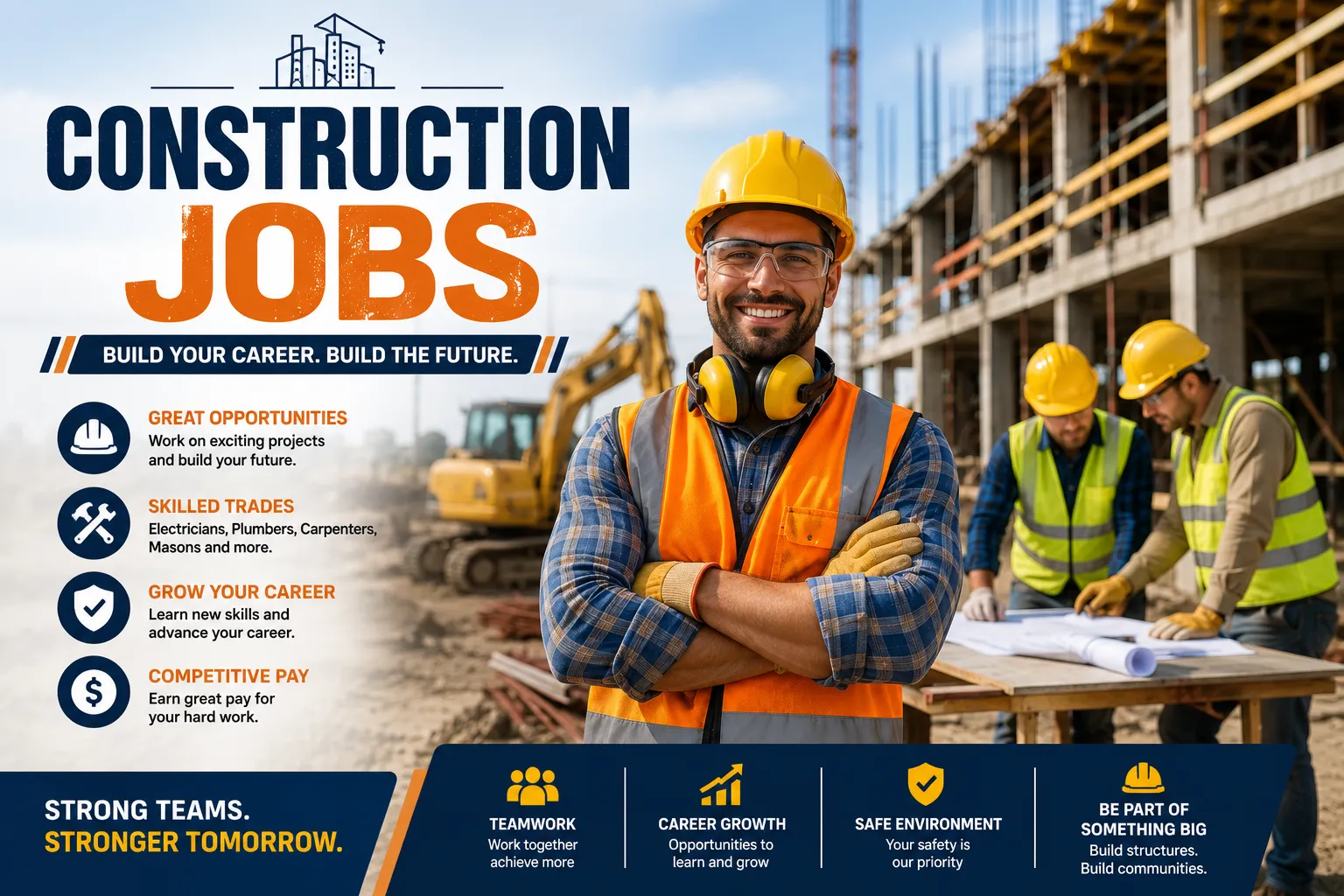
Construction Jobs: A Complete Guide to Careers, Skills, and Opportunities
Construction jobs are an important part of every growing community. Homes, offices, roads, bridges, factories, schools, hospitals, shopping centers, and other buildings all require skilled workers to design, build, repair, and maintain them. Because construction projects are happening in many parts of the world, the industry offers a wide range of employment opportunities.
For people who enjoy practical work, working outdoors, using tools, solving problems, and seeing the results of their efforts, a construction job can be a rewarding career choice. There are also opportunities for people with different levels of experience. Some positions are suitable for beginners, while others require technical training, certifications, or years of experience.
Construction is not limited to one type of worker. A large project may require laborers, electricians, plumbers, carpenters, painters, welders, equipment operators, supervisors, engineers, and many other professionals.
This guide explains different types of construction jobs, the skills employers look for, how to find construction work, how to prepare for a job application, and how to build a long-term career in the construction industry.
What Are Construction Jobs?
Construction jobs involve building, repairing, installing, maintaining, or improving structures and infrastructure.
Construction workers may work on residential homes, commercial buildings, industrial facilities, roads, bridges, public projects, and other sites.
The responsibilities depend on the specific position.
A construction laborer may help move materials, prepare work areas, clean the site, and assist skilled workers. A carpenter may build wooden structures, while an electrician installs electrical systems.
Other workers may operate heavy equipment, install plumbing, paint buildings, work with concrete, or supervise construction teams.
Because construction projects require many different skills, there are career opportunities for both entry-level workers and experienced professionals.
Why Are Construction Jobs Important?
Construction plays a major role in economic and community development.
New homes and buildings provide places for people to live and work. Roads and bridges connect communities, while schools, hospitals, and public facilities support essential services.
Construction workers turn plans and designs into real structures.
The industry also supports many other businesses. Construction projects require materials, tools, transportation, equipment, safety products, and professional services.
This creates employment opportunities across many areas.
Common Types of Construction Jobs
There are many different construction careers. Understanding the options can help you choose a position that matches your skills and interests.
1. Construction Laborer
Construction laborers assist with general tasks on construction sites.
Their duties may include moving materials, preparing work areas, loading and unloading supplies, cleaning the site, digging, and assisting skilled workers.
This can be a useful entry-level position for someone who wants to gain construction experience.
A laborer can learn how construction sites operate and may later train for a specialized trade.
2. Carpenter
Carpenters work with wood and other materials to build and install structures.
They may construct walls, doors, floors, roofs, cabinets, and other components.
Carpentry requires accuracy, practical skills, and the ability to use tools safely.
Experienced carpenters may work on residential, commercial, or industrial projects.
3. Electrician
Electricians install, maintain, and repair electrical systems.
Their work can include wiring buildings, installing lighting, connecting electrical equipment, and troubleshooting problems.
Electrical work can be dangerous, so proper training, qualifications, and compliance with local regulations are essential.
4. Plumber
Plumbers install and repair water supply, drainage, and other plumbing systems.
They may work in homes, offices, factories, hotels, and other buildings.
Plumbing requires technical knowledge, practical skills, and attention to detail.
Many plumbing positions require formal training or certification depending on local laws.
5. Welder
Welders join metal parts using specialized equipment.
They may work on buildings, machinery, pipelines, vehicles, structural components, and industrial projects.
Welding requires technical training and careful attention to safety.
Protective equipment and proper procedures are essential when working with welding equipment.
6. Painter
Construction painters prepare and paint interior and exterior surfaces.
Their work may include preparing walls, applying paint, repairing surfaces, and using different painting tools.
Painters need attention to detail and knowledge of appropriate materials and techniques.
7. Heavy Equipment Operator
Heavy equipment operators operate machines such as excavators, loaders, bulldozers, cranes, and other construction equipment.
These positions usually require specialized training and authorization.
Operators must understand how to use equipment safely and work carefully around other workers.
8. Concrete Worker
Concrete workers help prepare, pour, spread, and finish concrete.
They may work on foundations, floors, roads, sidewalks, walls, and other structures.
The work can be physically demanding and requires careful measurement and teamwork.
9. Construction Supervisor
Construction supervisors coordinate workers and help manage daily site operations.
They may assign tasks, monitor progress, communicate with contractors, check safety procedures, and help solve problems.
Supervisory roles generally require significant construction experience and leadership skills.
Skills Needed for Construction Jobs
Construction workers need different skills depending on their position, but several abilities are valuable across the industry.
Physical Fitness
Many construction jobs involve standing, walking, lifting, bending, climbing, or working with tools and materials.
Workers should understand the physical requirements of the job and follow safe lifting and handling procedures.
Teamwork
Construction projects require many people to work together.
Workers need to communicate with supervisors, coworkers, contractors, engineers, and other professionals.
Good teamwork helps projects operate safely and efficiently.
Attention to Detail
Construction work often requires accurate measurements and careful installation.
Small mistakes can create larger problems later.
Workers should follow instructions carefully and check their work.
Communication
Clear communication is important on a construction site.
Workers need to understand instructions and communicate problems or safety concerns quickly.
Problem-Solving
Construction projects can face unexpected problems involving materials, weather, measurements, equipment, or schedules.
Workers who can think carefully and find practical solutions can be valuable members of a team.
Construction Jobs for Beginners
The construction industry can provide opportunities for people with little previous experience.
Entry-level workers may begin as general laborers or assistants.
Employers may provide basic training and teach new employees how to use tools, follow procedures, and work safely.
Beginners should be willing to learn and listen carefully to experienced workers.
Construction can also provide a pathway into skilled trades. After gaining experience, a worker may choose to train as a carpenter, electrician, plumber, equipment operator, or another specialist.
Education and Training Requirements
Requirements vary greatly between construction jobs.
Some entry-level labor positions may not require advanced education.
Skilled trades often require apprenticeships, vocational training, licenses, or certifications depending on the location and type of work.
Engineers, architects, and other professional roles usually require relevant education and professional qualifications.
If you are interested in construction, research the requirements for the specific trade you want to enter.
Training can improve your skills and may increase your employment opportunities.
Construction Safety
Safety is one of the most important parts of construction work.
Construction sites can contain heavy machinery, electrical systems, heights, tools, vehicles, materials, and other hazards.
Workers should always follow site safety rules and use required personal protective equipment.
Depending on the job, protective equipment may include helmets, safety footwear, gloves, eye protection, hearing protection, or other equipment.
Never operate machinery or perform specialized work unless you have the required training and authorization.
Report unsafe conditions, damaged equipment, or hazards to the appropriate supervisor.
Never ignore a safety procedure simply to complete a task faster.
How to Find Construction Jobs
There are several ways to find construction employment.
Online job websites are a useful place to search for vacancies. You can use terms such as:
- Construction worker
- Construction laborer
- Carpenter
- Electrician
- Plumber
- Welder
- Painter
- Concrete worker
- Heavy equipment operator
- Construction supervisor
You can also check the websites of construction companies, contractors, engineering firms, and property development companies.
Local employment agencies may also have construction vacancies.
Networking can be helpful in the construction industry. Experienced workers may learn about opportunities through professional contacts and local construction businesses.
How to Prepare a Construction CV
A good CV can help you get noticed by employers.
Start with your contact information and a short professional summary.
List your previous work experience and explain the construction tasks you have performed.
Mention specific skills such as carpentry, masonry, painting, welding, equipment operation, material handling, or site preparation if they apply to your experience.
Include relevant training, certifications, licenses, or apprenticeships.
If you are a beginner, highlight your willingness to learn, physical ability to perform the required work, teamwork, reliability, and any practical experience.
Always provide accurate information. Do not claim qualifications or experience that you do not have.
Construction Job Interview Tips
Before attending an interview, learn about the company and the position.
Be prepared to discuss your previous experience, skills, training, availability, and safety knowledge.
Employers may ask questions such as:
- Why do you want to work in construction?
- What construction experience do you have?
- What tools have you used?
- What safety procedures do you follow?
- Can you work as part of a team?
- Are you comfortable working outdoors?
- Can you work flexible hours?
- What would you do if you noticed an unsafe situation?
Answer honestly and clearly.
If you are new to construction, explain that you are willing to learn and follow instructions.
Arrive on time and bring any relevant documents or certificates requested by the employer.
Working Conditions in Construction
Construction workers may work in different environments.
Some projects are indoors, while others are outdoors.
Outdoor construction work can involve changing weather conditions, including heat, cold, rain, or wind.
Working hours may also vary. Some projects operate during normal daytime hours, while others may require early mornings, evenings, weekends, or overtime.
Before accepting a construction position, make sure you understand the schedule and working conditions.
Advantages of Construction Jobs
Construction careers offer several advantages.
One major benefit is the opportunity to learn practical skills.
Unlike some office jobs, construction workers can often see the physical results of their work. Completing a building, road, installation, or repair project can provide a sense of achievement.
The industry also offers different career paths.
Workers can specialize in a trade, become supervisors, start their own businesses, or move into project management and other professional roles.
Skilled construction workers can also find opportunities in different locations and industries.
Challenges of Construction Work
Construction work can be physically demanding.
Workers may spend long periods standing, lifting materials, climbing, or working outdoors.
Some projects can also involve tight deadlines and challenging conditions.
Safety risks are another important consideration.
Workers must take safety seriously and follow all workplace procedures.
Weather can also affect outdoor projects and working conditions.
Understanding these challenges before choosing a construction career can help you decide whether the industry is right for you.
Career Growth in Construction
Construction can offer strong opportunities for career development.
A worker might start as a laborer and gradually learn a skilled trade.
For example, an employee may begin as a construction helper, gain experience, complete training, and become a skilled carpenter or equipment operator.
Experienced workers may move into team leader or supervisor positions.
Other career paths include site management, project coordination, estimating, safety management, or construction business ownership.
Continuous learning can help workers qualify for more advanced opportunities.
How to Succeed in a Construction Job
If you want to build a successful construction career, develop a strong professional attitude.
Arrive on time and follow your schedule.
Listen carefully to supervisors and experienced workers.
Follow safety rules every day.
Take care of tools and equipment.
Communicate clearly when you have a problem or do not understand an instruction.
Continue learning new skills and take relevant training when available.
Be respectful toward coworkers and other professionals on the site.
A good reputation for reliability and safe work can help you find future opportunities.
Frequently Asked Questions About Construction Jobs
Do construction jobs require experience?
Not always. Some entry-level positions are available for beginners, while skilled positions usually require training and experience.
Can I start a construction career without a university degree?
Yes. Many construction trades are learned through practical training, apprenticeships, vocational programs, and work experience.
Are construction jobs physically demanding?
Many are. The physical requirements depend on the specific position and project.
Is construction work dangerous?
Construction involves potential hazards, but proper training, protective equipment, supervision, and safety procedures can help reduce risks.
Can construction workers get promoted?
Yes. Experienced workers can move into skilled trades, team leader, supervisor, project coordination, and management roles.
What is the best construction job for beginners?
General construction laborer or helper positions can be suitable starting points, depending on the employer and local requirements.
Conclusion
Construction jobs provide opportunities for people who enjoy practical work, teamwork, problem-solving, and building things. The industry includes many different careers, from general labor and carpentry to electrical work, plumbing, welding, equipment operation, and construction management.
For beginners, construction can provide a useful way to gain work experience and learn valuable skills. With training and dedication, an entry-level worker can develop a specialized trade and build a long-term career.
If you are searching for a construction job, start by identifying the type of work that interests you. Check the required qualifications, prepare a professional CV, search for suitable vacancies, and prepare for interviews.
Always take workplace safety seriously. Follow instructions, use required protective equipment, and never perform specialized tasks without the appropriate training.
Construction work can be challenging, but it can also be rewarding. Every building, road, bridge, and structure represents the work of people with different skills and responsibilities.
With hard work, continuous learning, and a professional attitude, a construction job can become more than just a source of income. It can be the beginning of a skilled and successful career with opportunities to grow over time.